

Why Are Chenille Patches Making a Huge Comeback in 2026?
The Texture That Refuses to Fade
You have probably seen chenille patches before. Maybe on a vintage varsity jacket, a streetwear hoodie, or a limited-edition cap. And if you are honest, you probably stopped to look at it. Nobody mentions that part when they talk about fashion trends. But that soft, fuzzy texture has a way of pulling your attention in a way that flat embroidery never can.
In a world saturated with printed apparel and standard embroidery, one of the biggest trends making a comeback in 2026 is custom chenille patches. Known for their soft texture, bold appearance, and premium look, chenille patches have become a favorite choice for varsity jackets, streetwear brands, and promotional apparel.
The numbers tell the story. By 2026, demand for chenille texture has surged by 38% among boutique streetwear labels and luxury fashion houses. The market is leaning heavily into “preppy” and “retro” aesthetics. Brands are moving away from sterile digital looks and returning to designs that feel grounded and authentic.
So why now? Why is a textile technique that originated in the 19th century suddenly dominating modern fashion? The answer lies in three things: texture, nostalgia, and the human need to feel something real.
What Exactly Are Chenille Patches?
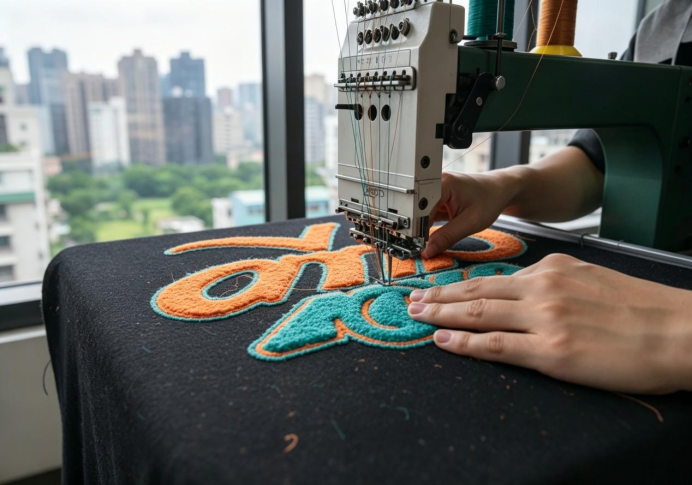
Custom Chenille patches are embroidered emblems made with looped yarn that creates a soft, fuzzy, raised texture. Unlike standard flat embroidery, which uses thin thread to create a 2D image, chenille uses thick acrylic or wool yarn to build a plush, three-dimensional surface. The yarn loops are stitched through a sturdy felt or twill backing, then snipped to create that characteristic velvety pile.
The name “chenille” comes from the French word for caterpillar, and it is easy to see why. The soft, fuzzy loops resemble a caterpillar‘s fuzzy body. This texture is fundamentally different from standard embroidery, which relies on tight, flat stitches that create a shiny finish. Chenille doesn’t shine. It invites touch.
Standard embroidery patch is flat and precise. Chenille is raised, plush, and bold. It works especially well for large designs: letters, mascots, logos, and monograms. Small text or overly detailed artwork? Chenille struggles there. But for bold statements? Nothing beats it.
A professional chenille patch has a four-layer architecture that ensures durability: a scrim felt base, a top felt border, the acrylic yarn pile, and embroidered detail on top. This structure gives the patch its signature 3D profile while keeping it flexible enough to move with the garment.
The 150-Year History That Makes It Mean Something
Chenille didn‘t just appear on a runway last season. Its roots run deep. The story starts in 1865 at Harvard University, when the baseball team first used oversized cloth letters to reward their top athletes. That simple gesture started a tradition that would last for over a century and a half.
By the 1930s, varsity jackets had taken that tradition off campus entirely. The letter on your sweater meant something earned: belonging, pride, and status. Over the decades, chenille patches became the visual shorthand for achievement. They carried emotional weight. A letterman jacket wasn‘t just clothing. It was proof of what you had done.
That heritage is exactly what makes chenille so valuable to brands in 2026. When you add a chenille patch to a product, you’re tapping into over 150 years of organizational identity and achievement. It‘s a visual shorthand for quality and tradition. It signals authenticity without having to say a word.
Why Texture Matters More Than Ever in 2026?
We live in a digital world. Screens everywhere. Pixels replacing physical experiences. And yet, paradoxically, that digital saturation has made physical texture more valuable than ever. People are craving something they can actually feel.
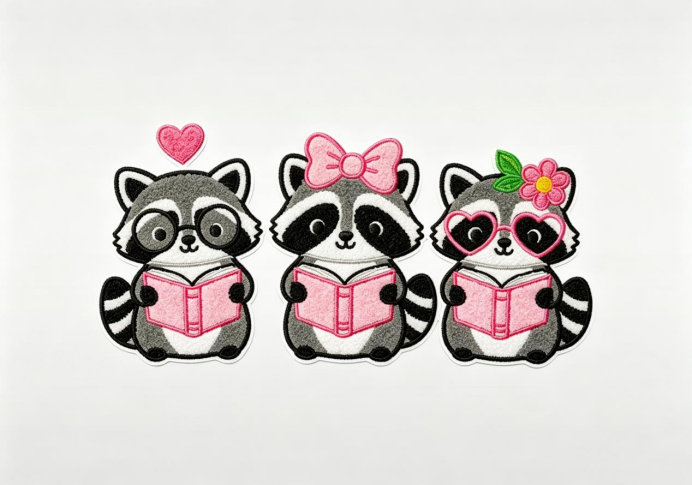
Chenille delivers that. Its raised, fuzzy surface creates a visual dimension that flat embroidery simply cannot replicate. It catches light at different angles. It sits higher on the fabric. It draws attention without demanding it. There‘s a reason flat embroidery never fully displaces chenille in the market. The tactile experience is fundamentally different, and that difference carries more psychological weight than brands often credit.
When you touch a plush, well-made patch, you immediately associate it with heritage and investment. That emotional connection to the soft, high-end feel is what turns a simple garment into a premium collector‘s item. Customers don‘t just look at these patches; they want to touch them.
This tactile appeal is especially important in 2026, as consumers increasingly associate texture with quality. A 2026 guide to premium varsity style notes that the “varsity” look is all about structural integrity and the emotional response it triggers. It’s nostalgic yet modern, and that combination is powerful.
From Varsity Jackets to High Fashion: Where Chenille Is Showing Up
The primary canvas for chenille‘s return remains sports apparel, but its application has expanded dramatically. What started on baseball fields is now everywhere.
Varsity and Bomber Jackets
This is still the ultimate canvas for chenille patches. Large chenille designs on the back of jackets create the strongest visual impact. Oversized letters, mascots, and team names look bold and authentic in chenille. The texture instantly signals varsity style, making it the most iconic choice for letterman jackets.
Streetwear and Luxury Fashion
Streetwear brands have embraced chenille as a way to add textured, heavy-weight branding to oversized hoodies and sweats. Trapstar, for example, uses raised chenille Arch logos across tracksuits, tees, and shorts. Brands like BAPE, Puma, and Stussy have all released limited-edition pieces featuring chenille patches.
High-end collaborations are also driving the trend. Nike collaborated with Nigo on a varsity jacket featuring chenille brand patches. BAPE and Highsnobiety released a jacket finished with chenille patches featuring BAPE‘s iconic ape. Wrangler partnered with Cherry for a brown suede jacket with chenille embroidered details from both brands. KidSuper has used iconic chenille graphic patches in collaborations with PUMA and others.
Hats, Caps, and Headwear
Headwear fashion has embraced chenille patches in a big way. From classic mesh trucker hats to structured snapbacks, relaxed dad caps, and winter beanies, custom hat patches have become essential design elements. Designers are shifting away from direct embroidery on hats and instead investing in custom-made patches, which offer production flexibility and flawless detail.
Bags and Accessories
Chenille patches are transforming backpacks, tote bags, and travel gear into premium statement pieces. The resurgence of chenille and headwear patch embellishments reflects a broader trend toward personalization, nostalgia, and tactile design.
What the 2026 Color and Design Trends Look Like?
Designers are pushing chenille into distinctly contemporary territory in 2026. Trends are shifting toward earthy and natural tones like olive green and rust orange, though soft pastels like lavender and blush pink remain popular.
The worn-in, slightly faded color palettes associated with vintage items are being replicated in chenille form. This caters to both older generations seeking nostalgia and younger consumers romanticizing past decades. At the same time, electric pinks, lime greens, and vivid oranges make patches highly visible day and night.
The Practical Side: Why It Lasts
Despite its soft appearance, chenille is built to last. When properly manufactured, custom chenille patches can withstand years of wear while maintaining their appearance. The felt backing provides structural stability, while the yarn loops are engineered to resist unraveling.
The patches are available with sew-on backing for permanent attachment, iron-on backing for DIY application, or Velcro backing for removable patches. This versatility makes chenille patches suitable for everything from permanent uniform decoration to seasonal promotional items.
Why Choose Custom Panda for Your Chenille Patches?
The chenille trend is real. But a trend only delivers value if the product is made right. A cheaply made chenille patch with poor yarn density and weak backing will lose its shape and fuzz within months. That is wasted money. Custom Panda ensures that does not happen.
Custom Panda is a direct factory with over 15 years of experience in custom manufacturing. We specialize in custom patches, custom keychains, custom lapel pins,and custom labels. One supplier, four product categories. We handle everything in-house—from artwork optimization to final packaging.
Our core advantages:
No minimum order:50 pieces or 50,000. We accept any quantity. Test a small batch before scaling up.
Free design proof within 12 hours:Send your logo, sketch, or reference image. Our team creates a professional digital proof for your approval. No charge. No obligation.
Factory direct pricing:We manufacture in our own facility. No middlemen. No markup. You pay for the product, not for someone else‘s overhead.
Production in 2–3 days:After proof approval. Samples in 3–5 working days. Bulk orders in 7–15 working days depending on quantity.
Worldwide shipping in 5–7 days:Via DHL, FedEx, or UPS. Door-to-door tracking included.
Material options:Zinc alloy, brass, stainless steel, acrylic, PVC, leather. Finishes: gold, silver, nickel, antique, matte, polished. Our team recommends the best match for your budget and usage scenario.
Real people, not scripts – Message us:You get a human who understands production and cares about your order. The one who catches artwork issues before they go into production. The one who ships early when you have a deadline.
We are not the biggest supplier. We are the one that delivers quality, speed, and straight answers. Send us your idea. Get a free proof in 12 hours.
FAQs
Q:What is the difference between chenille patches andcustom embroidered patches?
Chenille patches have a raised, fuzzy texture created by looped yarn, giving them a soft, plush feel and a bold, three-dimensional appearance. custom embroidered patches uses tight, flat stitches to create a smooth, precise finish, making it better for small text and fine details. Chenille is ideal for large, bold designs like letters and mascots, while embroidery excels at intricate logos and detailed artwork.
Q:What is the minimum order quantity for custom chenille patches?
Custom Panda has no minimum order requirement. We accept orders of any size, from small test batches to large production runs.
Q:Can chenille patches be washed?
Yes. When properly manufactured, chenille patches can withstand regular washing. Turn the garment inside out and wash in cold water. Avoid high heat in the dryer.
Q:How long does production take?
Once you approve the digital proof, production takes just 2 to 3 days. Samples are ready in 3 to 5 working days, with worldwide delivery in 5 to 7 days.
Q:Can I get a sample before placing a bulk order?
Yes. We strongly recommend ordering samples first to inspect quality, colour accuracy, and finish before full production.
Q:Do you ship internationally?
Yes. We ship worldwide via DHL, FedEx, and UPS with door-to-door tracking and customs assistance.
SEO Keywords: chenille patches, custom chenille patches, varsity patches, letterman patches, streetwear patches
Meta Description: Why chenille patches are trending in 2026. Varsity jackets, streetwear, texture, nostalgia, and brand appeal.