

What Makes Custom Military Patches So Durable and Rugged?
More Than Just Fabric and Thread
Most people see a custom military patch and think it is just a piece of fabric with some stitching. But anyone who has worn one through a field exercise, a deployment, or even just a regular training day knows better. A military patch takes abuse that would destroy ordinary clothing accessories. It gets rained on, baked in the sun, rubbed against gear, snagged on branches, and washed repeatedly. And it is supposed to still look presentable when the soldier wearing it stands in formation.
That level of durability does not happen by accident. It is engineered into every stage of the patch's creation, from the material chosen to the way it is attached. What makes custom military patches so durable and rugged is not one single factor, but a combination of deliberate choices made long before the patch ever reaches a uniform.
Material Choices That Withstand the Elements
The foundation of any durable military patch is the material it is made from. Different materials offer different advantages, and the right choice depends on how and where the patch will be used.
PVC and Rubber: The Tough Contender
Custom PVC patches have become increasingly popular in military applications because they are built for demanding environments.
Made from flexible rubber-like material, PVC patches do not fade, crack, or wear down even in harsh conditions:
They shrug off water, mud, heat, and friction, making them perfect for soldiers and outdoor enthusiasts operating in tough conditions-
Unlike fabric patches that absorb moisture and can become damaged, PVC patches are completely waterproof.
They resist prolonged exposure to rain, sweat, sunlight, and friction.
The material is also corrosion-resistant and maintains its flexibility over time, outperforming traditional fabric patches that are prone to fading or cracking-
For units that need maximum durability in demanding environments, PVC patches are often the superior choice.
Custom Embroidery: The Classic Workhorse
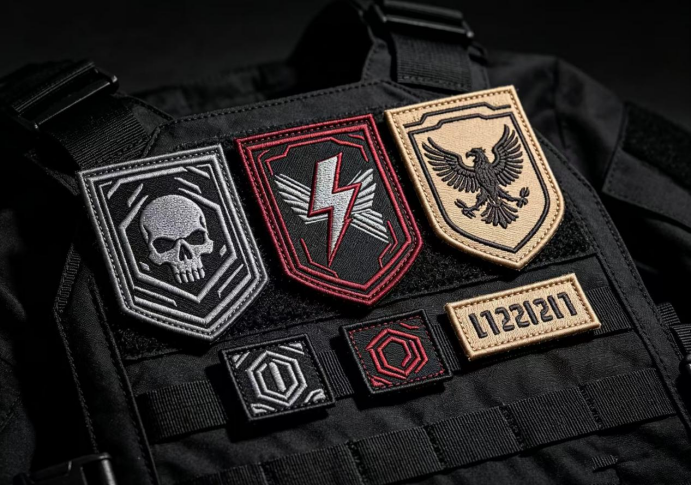
Custom Embroidered patches remain the most traditional choice for military uniforms.
But not all embroidery is created equal. High-density embroidery uses more stitches per square inch, creating a tighter, more durable surface that resists wear and fraying.
Industrial-strength polyester thread is the standard, offering vibrant colors that hold up over time.
Military-grade embroidered patches are constructed with reinforced edges to prevent fraying and withstand rugged outdoor use.
The best ones use durable materials and expert stitching that can last for years in service.
While embroidered patches may not match PVC's waterproof capabilities, they offer a classic look and texture that many units still prefer.
Construction Techniques That Prevent Failure
A patch is only as durable as the way it is put together. Military patches are constructed with techniques that anticipate the abuse they will face.
Tight, Dense Stitching
For embroidered patches, stitch density is everything. Higher stitch counts create a tighter weave that resists snagging and fraying. Loose stitching is the first thing to fail when a patch gets caught on equipment or rubbed against rough surfaces. Military-grade patches use dense stitching that holds up under repeated stress.
Reinforced Edges
The edges of a patch are its most vulnerable point. Fraying edges are the most common failure mode for embroidered patches. Military patches address this with reinforced edges that prevent unraveling.
Whether through merrow borders, laser cutting, or heat sealing, the edge treatment determines how long the patch stays intact.
Colorfast Dyes and Fade Resistance
Military patches are exposed to intense sunlight, and fading makes a patch look worn long before it actually fails. Quality military patches use colorfast dyes that resist fading.
PVC patches have the advantage here because the color is mixed into the material itself rather than applied to the surface, making it virtually immune to UV damage.
Attachment Methods That Keep Patches Secure
A durable patch that falls off is useless. The attachment method is just as important as the patch itself.
Sew On Patch: The Permanent Solution
Sew on backing is the strongest option for heavy-use workwear.
Sergeant chevrons, department shoulder patches, and any patch intended to stay on one uniform for its entire service life typically use sew-on backing.
Custom Sew on patches survive years of washing, hard outdoor use, and physical work without lifting at the corners or losing their grip.
For permanent identification that will never need to be moved, sew on is the gold standard.
Velcro Patch: The Tactical Standard
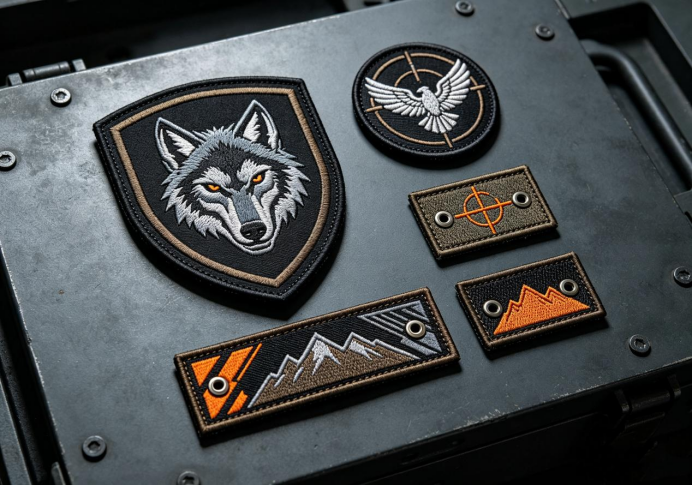
Velcro backing is the standard for military, tactical, and uniform patches.
It allows patches to be removed and swapped quickly, which is essential for units that change patches based on mission requirements, rank changes, or operational security.
Militarycustom Velcro patches use industrial-grade hook-and-loop material, often heat-bonded for durability.
Premium patches employ double-stitched Velcro backing for added reinforcement, preventing peeling or detachment during rigorous activities.
The construction typically involves durable woven nylon or polyester fabrics for the main patch body, selected specifically for resistance to abrasion and environmental exposure.
The flexibility of Velcro also means soldiers can move patches between different pieces of gear, from uniforms to tactical vests to backpacks.
This modularity does not sacrifice durability. Properly constructed Velcro patches are engineered to withstand harsh conditions including moisture, heat, and mechanical stress.
The Role of Design in Durability
Even the best materials and construction will fail if the design itself is flawed. Military patches are designed with durability in mind from the start.
Bold, Simple Shapes
Intricate designs with thin lines and small details are more likely to fail. Fine embroidery threads break more easily, and small enamel details can chip. Military patches typically use bold, simple shapes with thick lines that hold up better under stress.
Practical Size and Placement
A patch that is too large or placed in a high-wear area will fail faster. Military patches are sized and positioned to minimize exposure to friction points like shoulder straps, body armor edges, and equipment contact zones.
Subdued Color Palettes
Many military patches use subdued color palettes that are not just about camouflage. Darker, more muted colors show less wear and fading over time than bright colors.
This practical design choice extends the useful life of the patch.
Why Durability Matters Beyond the Uniform?
Durable military patches are not just about keeping a uniform regulation-compliant. They carry meaning. A unit patch, a deployment identifier, or a morale patch represents something bigger than fabric and thread. When a patch falls apart, it is not just a piece of gear that fails. It is a symbol that fades.
Soldiers keep patches for years, sometimes decades, after they leave service. A patch that stays intact becomes a tangible link to service, to unit pride, and to shared experience. That is why durability is not optional. It is part of what the patch represents.
Why Choose Custom Panda As Your Custom Military Patches?
Custom Panda brings over 15 years of expertise to custom military patches. We understand that durability is not a feature, it is a requirement. Our patches are engineered to withstand the toughest conditions, whether you need classic embroidered patches with reinforced edges or rugged PVC patches that shrug off water and wear.
Not because we are the biggest factory out there, but because we are the kind of people who notice when a colour is slightly off and fix it before you even have to ask.
Beyond patches, our core product lines also include custom pins, and custom labels:making us your comprehensive partner for all garment identification and branding needs.
When you choose us for your custom military patches, you benefit from:
Premium Materials:From high-density embroidery thread to corrosion-resistant PVC and durable Cordura nylon, we use materials built for the field.
Multiple Attachment Options :Choose sew on for permanent security, Velcro for tactical flexibility, or iron on for quick application. Every attachment method is tested for strength and durability.
No Minimum Order:Whether you need patches for a small unit or a full battalion, we accept orders of any size.
Free Design Proof Within 12 Hours:Share your artwork or rough idea, and our team will turn it into a professional digital proof.
Fast Production:Once approved, production takes just 2 to 3 days. Sample production takes 3 to 5 working days, and bulk production takes 7 to 15 working days (depending on the order volume).
Factory Direct Pricing: As a direct manufacturer, we eliminate middlemen to deliver premium quality at the best price.
Your patch represents something worth keeping. We make sure it stays that way.
We run our own production facility. That means when you order from us, you are talking to the people who actually make your custom military patches, not a middleman who forwards your order to someone else and marks up the price. We handle everything in-house, from mould development and metal stamping to electroplating and enamel filling. That is how we catch problems before they become your problems.
Ready to get started? Contact us today,we will have your free digital proof ready within 12 hours.
FAQs
Q:What material is most durable for military patches?
PVC patches offer the highest durability, resisting water, UV, abrasion, and extreme temperatures better than fabric options. High-density embroidery with reinforced edges is the most durable fabric-based choice.
Q:Are Velcro patches durable enough for combat use?
Yes. Industrial-grade Velcro with double-stitched reinforcement is standard for military applications and withstands rigorous activity, moisture, and heat.
Q:How long do custom military patches last?
With proper materials and construction, PVC patches can last for years without significant wear. High-quality embroidered patches also last for years, though they may show signs of wear sooner than PVC.
Q:What is the difference between sew-on and Velcro patches for durability?
Sew on patches are more permanent and secure for long-term wear. Velcro patches offer flexibility and quick changes while still providing strong, durable attachment when constructed with industrial-grade materials.
Q:Can I get a sample before placing a bulk order?
Yes. Samples are available to inspect quality, material feel, and attachment strength before full production.