

Top 5 Medal Design Trends for 2026: Interactive, Personalized, and Sustainable
The Medal Is No Longer Just a Finisher‘s Gift
For years, Custom Medals were standard. Safe. You knew exactly what you were going to get. A round disc. A logo in the centre. A ribbon through a loop at the top. The design was predictable, and so was the reaction. Recipients took the medal, glanced at it, and often put it in a drawer or hung it on a wall where it would gather dust.
That era is over. Today‘s medals are not just about winning or finishing; they’re about telling a story. Participants expect more. They want medals that feel substantial, look distinctive, and carry meaning beyond the event itself. A medal is no longer a participation reward—it has grown into a premium collectible item that reflects the quality of the event.
In 2026, three forces are reshaping the medal industry: interactivity, personalization, and sustainability. These are not passing fads. They are fundamental shifts in what recipients value and what event organizers must deliver. Let‘s explore the top five trends that define medal design in 2026.
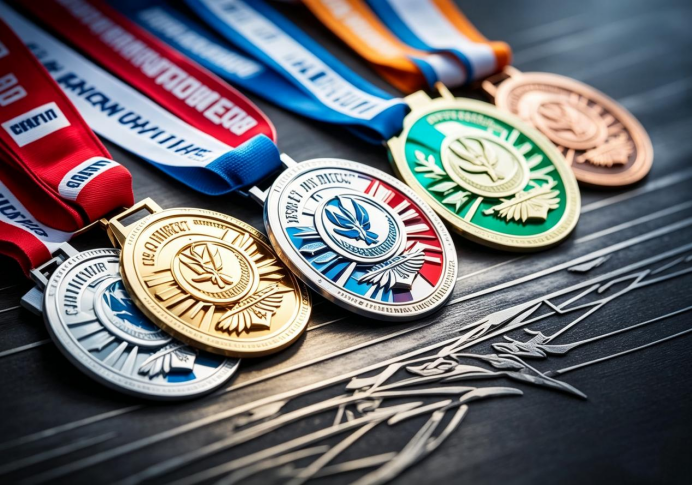
Trend 1: Interactive Medals That Do Something
Static medals are fading fast. People love design that does something. That‘s why interactive medals are one of the biggest trends heading into 2026. When a medal spins, slides, or reveals a hidden element, it triggers an instinctive response. People don’t just look at it,they play with it. And when they play with it, they share it.
Spinning Medals are leading this movement. A spinning medal features a centrepiece that rotates 360 degrees within the frame. The rotating element can display different imagery or messages on each side, telling a dual story. It’s simple, but it works—people instinctively spin it the moment they receive it.
Interlocking and Puzzle Medals are another major trend. These medals are designed so that multiple awards fit together like puzzle pieces, mechanically or magnetically snapping to form a larger map, shield, or image. This strategy increases athlete retention, as participants are enticed to “complete the set” by attending multiple events in a series.
Beyond spinning and puzzle designs, medals are incorporating sliding components, rotating frames, and even sunlight-activated colour-changing enamel. These features create a “fidget factor” that athletes love to display in unboxing videos and finish-line photos. For race directors, an interactive design signals a professional, high-end production that justifies premium registration fees.
Trend 2: 3D Texture and Layered Finishes
If there‘s one thing that sets modern medals apart, it’s texture. Designers have fully embraced relief, depth, and layered finishes that give each medal life—not just in how it looks, but in how it feels.
3D cast allows for multi-layered reliefs, sandblasted backgrounds that create a high-end matte contrast with polished raised text, and translucent enamels that let light flow through like stained glass. Intricate cut-outs create a medal that looks light and artistic while maintaining structural strength.
Zinc alloy medals have been at the centre of this design evolution. Because zinc alloy can be die-cast into almost any shape, designers can now create medals with complex 3D relief, cut-out sections, moving parts, fine text, and dual-tone plating.
The demand for uniqueness is driving this trend. Events want medals that participants will post on social media. A generic medal is unlikely to be shared. A custom-designed medal with distinctive features becomes part of the event‘s marketing.
Trend 3: Sustainability as the Industry Standard
Sustainability is no longer a side note; it is becoming the heartbeat of the industry. For too long, the awards world focused on how medals looked, not what it cost the planet to make them. But that is changing.
Recycled metals have become a major trend. Made from reclaimed metal sources rather than newly refined raw materials, these medals appeal to organizations with sustainability goals. The Milan Cortina 2026 Winter Olympic medals were crafted by the Italian State Mint using recycled metals and renewable energy—an Olympic first. The medals were produced from recycled metal recovered from the mint‘s own discarded or waste material, cast in induction furnaces powered entirely by renewable energy.
Wooden medals are another sustainable alternative. Responsibly sourced, FSC- or PEFC-certified wood offers a natural, warm aesthetic that metal cannot replicate. For events looking to stand out, wooden medals provide a distinctive look while communicating environmental responsibility.
Eco-friendly packaging is also gaining attention. The Milan Cortina medals feature packaging made with FSC-certified materials and minimal use of plastics. The protective finish applied to the medals is non-toxic and recyclable. These details matter to environmentally conscious audiences.
Race directors are now thinking beyond race day. They‘re thinking about the footprint they leave behind. And it’s showing up across the industry: eco-conscious production has become a defining hallmark.
Trend 4: Personalization Beyond the Logo
Personalization is key in 2026. Audiences want items that feel unique to them. Beyond adding a logo, brands are offering custom engraving—names, dates, or personal messages:on medals.
Custom shapes are also gaining popularity. A marathon medal shaped like a running shoe. A corporate award shaped like the company‘s product. These custom shapes reflect the recipient‘s interests or the event’s theme, making the medal more meaningful and memorable.
Personalized finishing adds another layer. Different finishes for different achievement levels:polished gold for champions, brushed silver for runners-up, antique bronze for participation:create a visual status system that recipients value.
When a medal carries a person‘s name, their event, their time, or a detail unique to them, it stops being a generic award. It becomes a personal keepsake. And personal keepsakes get kept.
Trend 5: Minimalist and Sleek Aesthetics
Gone are the days of overcrowded, overly ornate designs. In 2026, minimalist and sleek designs are taking center stage for custom medals.
Key features include clean lines, simple logos, and negative space to create a modern look. Monochromatic or limited colour palettes, such as black and gold or silver and white, create a premium feel. Smooth finishes—hard enamel, polished metal—emphasize quality and simplicity.
This trend is especially popular for corporate awards, employee recognition programmes, and high-end sports medals—where less is more. When done right, minimalism isn‘t about doing less. It’s about doing just enough. It‘s about refining meaning down to the essentials.
Minimalist medals have a calm energy. They whisper instead of scream. And in that quiet, the real message of achievement stands out.
Why Choose Custom Panda for Your Custom Medals?
Design trends are only valuable if they are executed properly. A spinning medal that doesn‘t spin smoothly, a recycled metal medal with poor plating adhesion, or a personalized engraving that’s misaligned,these are not just production flaws. They are brand disappointments.
Custom Panda is a direct factory with over 15 years of experience in custom manufacturing. We specialize in custom medals, custom lapel pins, custom patches , and custom labels.We handle everything in-house,from artwork optimization to final packaging.
Personalization at Scale:Custom engraving, custom shapes, and personalized finishes are our specialties. Whether you need individual names on each medal or a unique shape that reflects your event theme, our in-house production gives us full control over the process.
No Minimum Order:50 pieces or 50,000. We accept any quantity. Test a small batch before scaling up.
Free Design Proof Within 12 Hours:Send your logo, sketch, or reference image. Our team creates a professional digital proof for your approval. No charge. No obligation.
Factory Direct Pricing:We manufacture in our own facility. No middlemen. No markup. You pay for the product, not for someone else‘s overhead.
Production in 2–3 Days:After proof approval. Samples in 3–5 working days. Bulk orders in 7–15 working days depending on quantity.
Worldwide Shipping in 5–7 Days:Via DHL, FedEx, or UPS. Door-to-door tracking included.
Base Metal Options: Brass, copper, zinc alloy, or iron.
Surface Finishes: Gold, silver, nickel, antique, or dual-plated.
Real People, Not Scripts:Message us. You get a human who understands production and cares about your order. The one who catches artwork issues before they go into production. The one who ships early when you have a deadline.
We are not the biggest supplier. We are the one that delivers quality, speed, and straight answers. Send us your idea. Get a free proof in 12 hours.
FAQs
Q:What is the minimum order quantity for custom medals?
Custom Panda has no minimum order requirement. We accept orders of any size, from small test batches to large production runs.
Q:How long does production take for custom medals?
Once you approve the digital proof, samples are ready in 3 to 5 working days. Bulk orders take 7 to 15 working days depending on quantity, with worldwide delivery in 5 to 7 days.
Q:What materials are available for custom medals?
We offer zinc alloy, brass, and stainless steel, with finishes including gold, silver, nickel, antique, matte, and polished. Recycled metal options are also available.
Q:Can I get a sample before placing a bulk order?
Yes. We strongly recommend ordering samples first to inspect quality, colour accuracy, and finish before full production.
Q:What is the difference between soft enamel and hard enamel medals?
Soft enamel medals have a textured feel with raised metal lines and recessed colour, making them more affordable. Hard enamel medals are polished flat with the colour level with the metal, giving a smooth, jewellery-like finish that is more durable and premium.
Q:Do you ship custom medals internationally?
Yes. We ship worldwide via DHL, FedEx, and UPS with door-to-door tracking and customs assistance.